


1. The Mughal Empire
The Mughals ruled a very large part of the Indian subcontinent. This region had many different people and cultures. Earlier rulers could control this area only for short periods, but the Mughals created a stable empire.
From the late sixteenth century, they expanded their rule from Agra and Delhi. By the seventeenth century, they controlled almost the whole subcontinent. They built strong administrative systems and introduced effective methods of governance. These systems continued even after their rule ended.
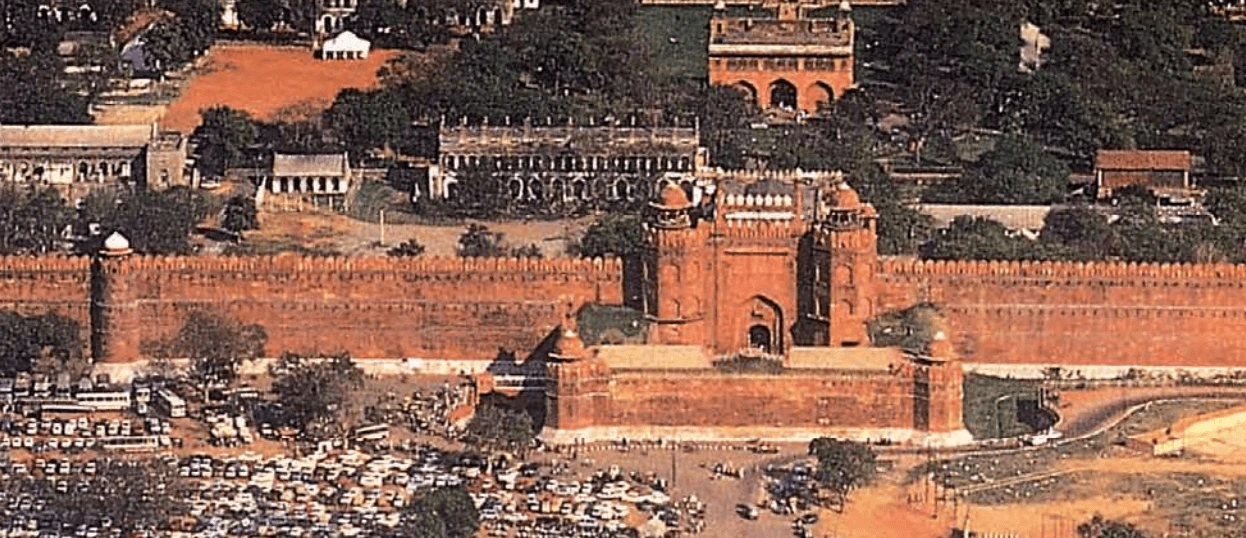
Today, the Prime Minister of India gives the Independence Day speech from the Red Fort in Delhi, which was once the residence of the Mughal emperors.
2. Who Were the Mughals?
The Mughals came from two important ruling families:
-
From their mother’s side, they descended from Genghis Khan, the Mongol ruler of Central Asia and China.
-
From their father’s side, they descended from Timur, the ruler of Iran, Iraq, and present-day Turkey.
The Mughals did not like being called “Mongol,” because people remembered Genghis Khan for large-scale killings, and their rivals, the Uzbegs, also claimed Mongol identity. Instead, they proudly called themselves Timurids.
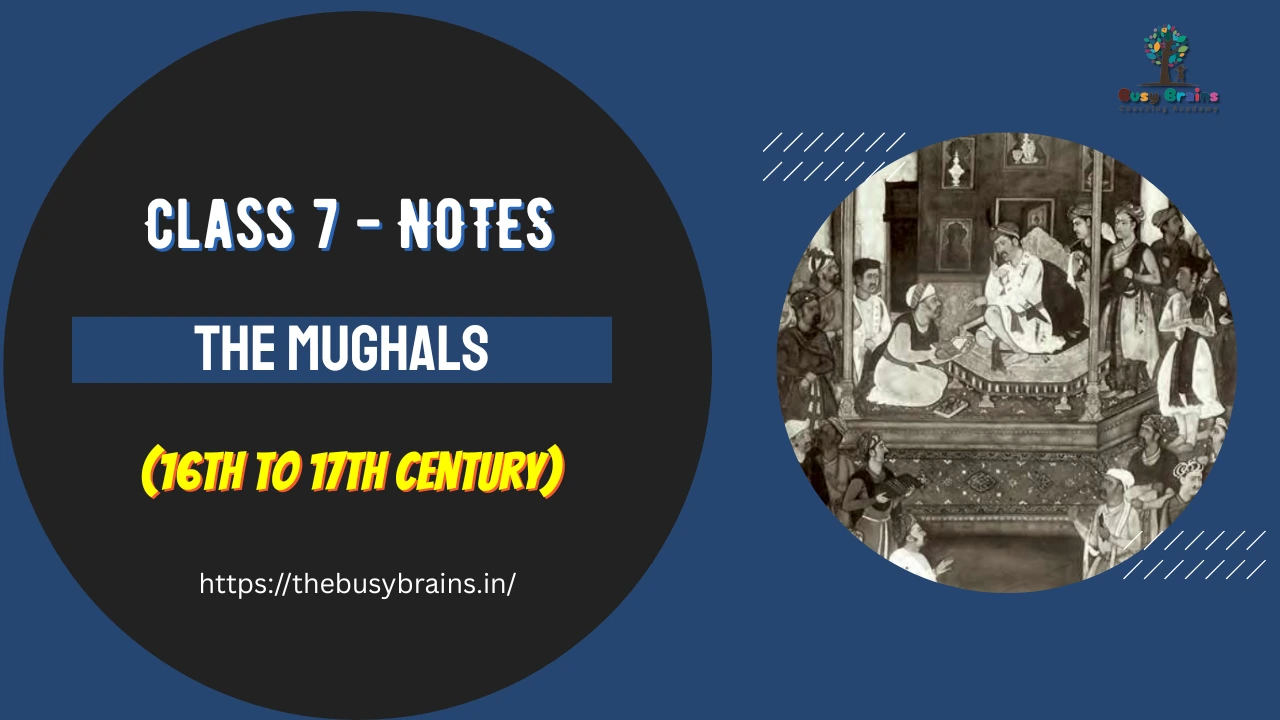
Every Mughal ruler displayed his genealogy by getting a painting made with Timur.
3. Mughal Military Campaigns
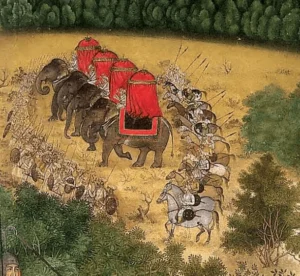 Babur became a ruler at the young age of twelve. When the Uzbegs attacked his ancestral kingdom, he lost his throne. After years of struggle, he captured Kabul in 1504.
In 1526, he defeated the Sultan of Delhi using cannons and gunpowder weapons and took control of Delhi and Agra, starting the Mughal Empire.
4. Mughal Tradition of Succession
The Mughals did not follow primogeniture (where only the eldest son becomes king). They followed coparcenary inheritance, where all sons had a share and could claim the throne. This often led to conflicts between princes.
5. Relations with Other Rulers
The Mughals fought rulers who refused their authority. However, many rulers joined them willingly.
Rajputs
-
Many Rajput rulers accepted Mughal rule.
-
They often married their daughters into the Mughal family.
-
In return, they received high positions in the empire.
For example:
-
Jahangir’s mother was a Kachhwaha princess of Amber.
-
Shah Jahan’s mother was a Rathor princess of Marwar.
The Mughals defeated enemies but treated them respectfully and returned their lands as assignments. This policy helped maintain peace.
6. Mansabdars and Jagirdars
As the Mughal Empire grew, it included people from many regions and communities—Turkish nobles, Iranians, Indian Muslims, Afghans, Rajputs, Marathas, and others. Those who joined the Mughal administration were called mansabdars.
Who is a Mansabdar?
-
A mansabdar was an officer who held a mansab, which means rank or position.
-
The Mughals used the mansab system to fix:
-
Rank
-
Salary
-
Military responsibilities
-
Zat – Rank in the Mughal System
-
Zat was the number that decided the rank and salary of a mansabdar.
-
Higher the zat → higher the position → higher the salary.
-
Example:
-
Zat 5000 = very high rank
-
Zat 1000 = lower rank
-
In Akbar’s reign, 29 mansabdars had a zat of 5000.
In Aurangzeb’s reign, the number increased to 79.
Military Duties of a Mansabdar
-
A mansabdar had to maintain a fixed number of sawars (cavalrymen).
-
He had to bring his soldiers and horses for inspection.
-
Horses were branded and registered.
-
After review, he got money from the emperor to pay the soldiers.
Salary and Jagirs
-
Mansabdars were paid through jagirs (revenue assignments).
-
Jagirs were similar to iqtas, but there was a difference:
-
Iqta holders lived in and managed the land.
-
Mansabdars did NOT live in their jagirs.
-
-
Their servants collected revenue from the jagir, while the mansabdar was posted elsewhere in imperial service.
7. Zabt and Zamindars
Main income
The Mughal rulers depended mainly on taxes collected from farmers.
Zamindars
-
Local chiefs and headmen collected taxes from peasants.
-
The Mughals called all such intermediaries zamindars.
Zabt System
Akbar’s revenue minister Todar Mal surveyed land for ten years. He recorded crop yields, prices, and cultivated areas. He fixed tax rates for each crop. This system was called zabt. It worked only in areas where Mughals could maintain strict control and keep detailed records, such as North India. In some regions, zamindars became powerful and rebelled along with peasants. These revolts weakened the Mughal Empire in the late seventeenth century.
8. Nur Jahan’s Influence
Mehrunnisa married Emperor Jahangir in 1611 and became Nur Jahan. She became powerful in the court. Jahangir even issued coins with her name. She also issued farmans (royal orders), showing her immense authority.
9. Akbar Nama and Ain-i-Akbari
Akbar asked his court historian Abul Fazl to write about his reign.
Abul Fazl wrote:
Akbar Nama (3 volumes)
-
Volume 1: History of Akbar’s ancestors
-
Volume 2: Events of Akbar’s reign
-
Volume 3 (Ain-i-Akbari):
-
Administration
-
Army
-
Revenue system
-
Geography
-
Culture
-
Detailed statistics on crops, yields, prices, wages, and revenues
-
These works are important sources for understanding Mughal India.
10. Sulh-i-Kul (Universal Peace)
Akbar followed the policy of sulh-i-kul, which means “peace for all.” He allowed people of all religions to live peacefully. He promoted tolerance and discouraged discrimination. Jahangir praised this policy in his writings.
11. The Mughal Empire in the 17th Century and After
The strong administration and army made the empire wealthy. Foreign travellers described India as a land of great riches. However, they also noticed deep poverty among peasants.
Inequalities
-
A small group of high-ranking mansabdars received a large share of the empire’s revenue.
-
Peasants and artisans remained poor because heavy taxes left them with little to invest in their work.
Decline
-
As emperors lost power, powerful ministers and governors became independent.
-
Regions like Awadh and Hyderabad formed their own kingdoms.
-
Even though they accepted the Mughal emperor in name, they ruled independently by the 18th century.
Class 7 Worksheet – The Mughals (16th to 17th Century) | 50 Marks Practice Paper